
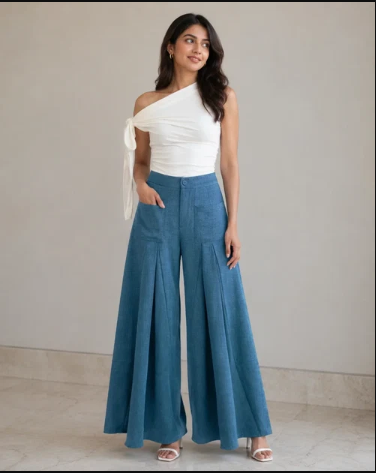
Ever wondered why some outfits instantly look balanced while others feel slightly off? It often comes down to proportion. From dresses for women to crop tops and wide-leg trousers, the length, volume, and placement of each piece can change the way an outfit comes together. Once you understand these simple details, styling everyday clothes becomes much easier, and you can make more of what is already in your wardrobe.
Start With the Shape of Your Outfit
Before adding accessories or choosing footwear, look at the overall shape. Is the outfit fitted, relaxed, cropped, flowing, or structured?
A loose piece paired with another oversized item creates a relaxed effect, while contrasting a fuller piece with something more fitted can add definition. Neither approach is better; they simply create different visual impressions.
The most useful thing is to notice how each piece contributes to the outfit rather than considering it on its own.
Create Balance With Top and Bottom
The relationship between your top and bottom is one of the easiest places to experiment.
A cropped top, for example, can work naturally with high-rise bottoms because the shorter hem complements the higher waist. This is where crop tops can become more versatile than they first appear. They can be styled casually with denim or balanced with fuller trousers and skirts.
On the other hand, a longer, relaxed top can work well with a more streamlined bottom. The contrast helps prevent the outfit from looking too bulky.
Give Wide-Leg Pants Room to Stand Out
Wide leg pants women style can make a strong statement on their own, particularly when paired with a clean, simple top.
A tucked-in shirt or shorter top can define the waist, while a fitted knit can create a sharper contrast against the relaxed leg. For a more fluid look, try a loose top in a lightweight fabric and keep the rest of the outfit minimal.
The fabric matters too. Structured trousers create a different effect from soft, flowing ones, even when they have a similar cut.
Dresses Create Their Own Proportion
One-piece dressing simplifies the process because the main silhouette is already established. Dresses come in everything from fitted shapes to loose, flowing cuts, making them easy to adapt to different personal styles.
A fitted dress creates a defined outline, while an oversized or flowing style gives a softer appearance. Accessories can then change the balance without requiring another layer.
A belt, for instance, can add definition to a loose dress, while a longer outer layer can introduce another vertical line.
Think About Layers, Too
Layers can completely change the proportions of an outfit. A cropped jacket for women over a longer top creates visible length contrast. An oversized shirt worn open can add movement without overwhelming a simple base.
When layering, look at where each piece ends. Several pieces finishing at exactly the same point can make an outfit feel visually heavy. Different lengths usually create more dimension.
Proportion Is a Tool, Not a Rulebook
There is no perfect formula for dressing. Proportion simply gives you another way to understand why certain combinations feel balanced and why others may need a small adjustment.
Try changing one element at a time. Tuck in the top, switch the length of a jacket, or pair a fuller bottom with a simpler upper layer. Small changes can transform an outfit without requiring an entirely new wardrobe.
Once you start noticing proportion, getting dressed becomes less about following fashion rules and more about understanding how your clothes work together.
